Rhode Island Attorney General Targets Kalshi and Polymarket in State Court Filing
Written by Carlo Albrecht · May 29, 2026

Rhode Island Attorney General Targets Kalshi and Polymarket in State Court Filing
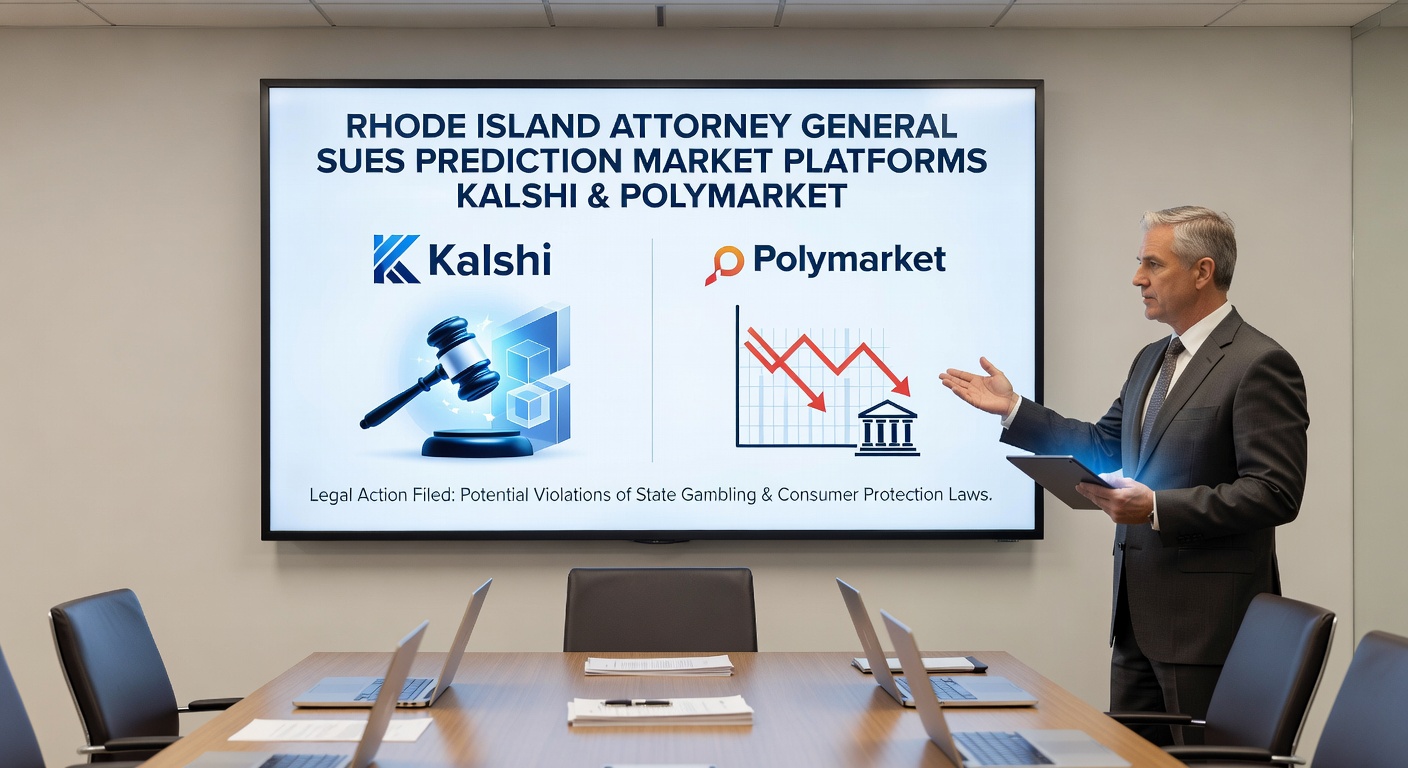
Rhode Island Attorney General Peter Neronha filed suit against prediction market platforms Kalshi and Polymarket in state court on May 21, 2026, and the complaint alleges that sports-related event contracts offered by these platforms amount to illegal sports betting under state law while also evading regulated gambling oversight. The action came amid expanding U.S. betting markets where platforms blend derivative-style trading with event outcomes that touch on sports results. Observers note that the timing placed the state filing alongside a preemptive federal lawsuit from Kalshi against Rhode Island earlier the same day, which set up overlapping legal fronts.
Details of the State Court Action
The complaint centers on contracts tied to sports events that Neronha's office claims fall outside federal derivatives rules and instead qualify as unlicensed sports wagering. Rhode Island maintains strict controls on who can offer such products, and the suit argues that Kalshi and Polymarket bypassed those controls by structuring trades around athletic competitions. Data from regulatory filings show these event contracts often mirror point spreads or over-under totals without the licensing that traditional sportsbooks require in the state. Those who've tracked similar cases in other jurisdictions point out that state attorneys general frequently cite consumer protection statutes when prediction platforms expand into sports-adjacent products.
Kalshi's Preemptive Federal Move
Kalshi submitted its own complaint in federal court on May 21, 2026, seeking to block Rhode Island from enforcing state gambling rules against its contracts. The filing contends that the platforms operate under Commodity Futures Trading Commission oversight as swaps or derivatives rather than as gambling operators. Court documents indicate Kalshi argued federal preemption applies because the contracts settle on event probabilities without direct wagers against a house. Experts have observed that such preemptive filings often aim to shift disputes into venues where federal jurisdiction may limit state enforcement reach.
CFTC Enters the Dispute
On May 28, 2026, the U.S. Commodity Futures Trading Commission filed its own lawsuit against Rhode Island, asserting exclusive federal authority over the prediction markets as regulated derivatives. The CFTC complaint emphasizes that Kalshi holds CFTC registration for certain event contracts and that state actions interfere with that framework. Figures from CFTC annual reports reveal a steady increase in approved event contract volumes since 2023, many of which reference non-sports outcomes yet create precedent for broader categories. The agency maintains that swaps and prediction products require uniform national standards rather than patchwork state rules. Attorney General Neronha responded by reiterating that sports-based contracts trigger separate state licensing requirements regardless of federal derivatives classification.
Underlying Jurisdictional Tensions
This sequence of filings highlights friction between state gambling regulators and federal derivatives oversight in an environment where prediction markets continue to grow. Rhode Island law prohibits unauthorized sports betting, and the state suit claims the platforms' offerings function identically to traditional bets despite their contract structure. Meanwhile the CFTC suit underscores the agency's view that once a product receives federal approval as a swap, state authorities cannot reclassify it as gambling. Researchers who study betting regulation note that similar clashes have appeared in other states where platforms offer contracts on elections or economic indicators before expanding into sports. The May 2026 actions occurred as total U.S. betting handle figures from industry trackers showed continued year-over-year growth, increasing the stakes for regulatory clarity.
How Event Contracts Operate
Kalshi and Polymarket structure their products as binary or multi-outcome contracts that users buy and sell at prices reflecting perceived probabilities. When a contract resolves, holders receive payouts based on the actual outcome, which the platforms say aligns with derivatives trading mechanics. Rhode Island's complaint alleges that contracts referencing professional or college sports results cross into sports betting territory because participants effectively wager on game outcomes. The platforms counter that settlement occurs through a central clearing process rather than peer-to-peer matching typical of sportsbooks. Observers point to CFTC no-action letters and approval orders that have historically distinguished certain event contracts from gambling, yet those distinctions face renewed testing when sports outcomes enter the picture.
Next Steps in the Litigation
Federal courts will now address Kalshi's request for injunctive relief and the CFTC's assertion of jurisdiction, while the state case proceeds in Rhode Island courts. The overlapping filings create the possibility of parallel proceedings that could produce conflicting rulings on whether sports-related event contracts fall under state gambling statutes or federal derivatives rules. Legal analysts expect motions to consolidate or stay one of the cases as parties seek a single venue for resolution. Data from past multi-jurisdictional disputes indicate that such matters often reach higher courts when federal agencies and states claim overlapping authority over emerging financial products.
Conclusion
The May 2026 lawsuits involving Rhode Island, Kalshi, Polymarket, and the CFTC illustrate how prediction market growth collides with existing regulatory boundaries around sports betting. State and federal authorities each advance distinct legal theories, and the outcomes will shape whether platforms can continue offering sports-adjacent contracts under federal derivatives oversight or must obtain state gambling licenses. The proceedings remain active with filings continuing after the initial May actions.