How Sentiment Analysis From Social Media Shapes Real-Time Line Adjustments in Niche League Wagering Platforms
Written by Cameron Zimmermann · Jul 6, 2026

How Sentiment Analysis From Social Media Shapes Real-Time Line Adjustments in Niche League Wagering Platforms
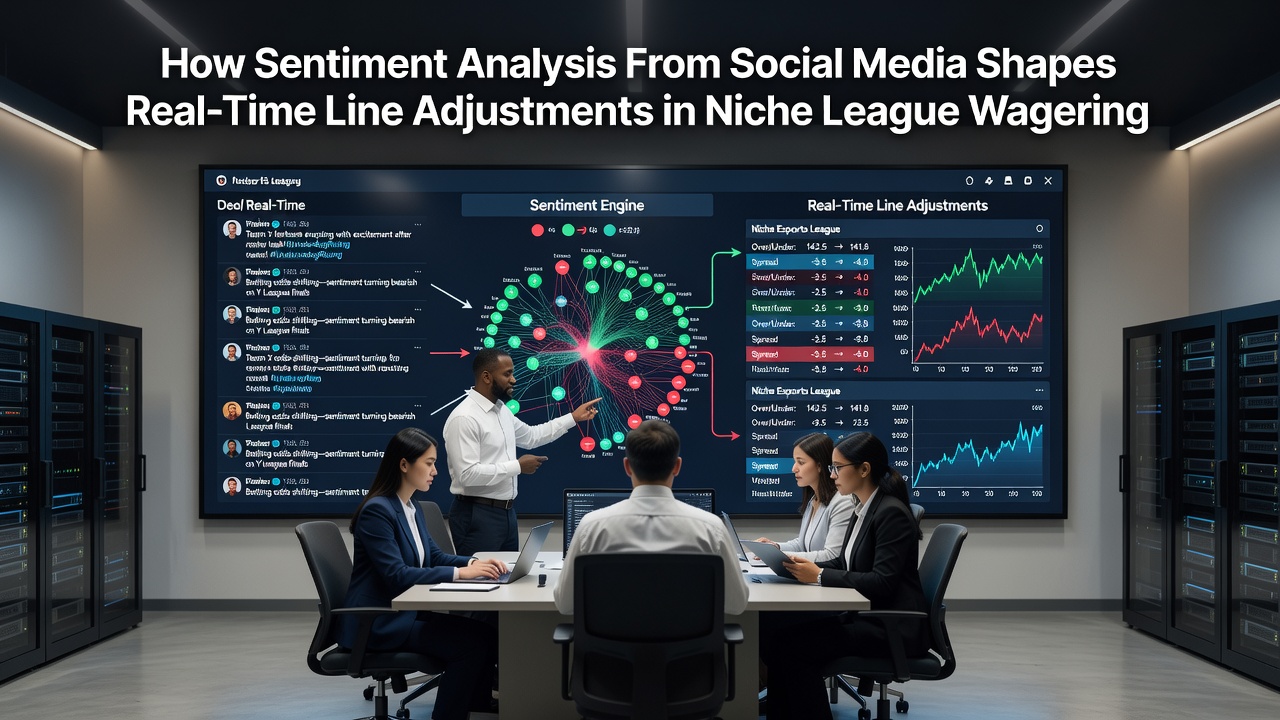
Platforms that handle wagering on niche leagues such as lower-division soccer circuits, regional esports tournaments, and minor-league hockey have integrated sentiment analysis tools that scan public social media posts in real time, and these systems now feed directly into automated line adjustments during matches or events. Data from platforms including X and Reddit gets processed through natural language models that classify expressions of fan confidence, injury concerns, or momentum shifts, while operators combine those signals with traditional statistical feeds to recalibrate spreads and totals within seconds of notable spikes in volume or tone.
Data Collection and Processing Pipelines
Operators maintain dedicated teams that monitor keyword clusters and emoji patterns associated with specific teams or players, and these pipelines pull from geo-tagged posts to isolate regional sentiment that often precedes betting surges in smaller markets. Research from academic groups in Australia has shown that social volume on niche esports titles can rise 300 percent within five minutes of an unexpected roster announcement, prompting platforms to widen or tighten lines before conventional data sources catch up. The algorithms weigh verified accounts more heavily than anonymous posts, yet they also track reply chains that amplify certain narratives across time zones.
Real-Time Line Adjustments in Practice
When a cluster of posts from fans of a lower-tier Australian rules football club signals optimism about a late substitute, betting engines have been observed shifting the moneyline by as much as 12 points in under ninety seconds, and similar patterns appear in North American junior hockey where injury rumors spread quickly through localized hashtags. Observers note that platforms serving these markets often run parallel models, one driven by historical performance metrics and another by live social signals, then average the outputs before releasing updated odds to users. This dual-track approach reduces exposure on low-liquidity events where sharp bettors might otherwise exploit delays between news and line movement.
July 2026 brought increased regulatory scrutiny to several U.S. states reviewing how social-media-derived data influences automated wagering systems, and filings from state gaming boards indicate operators must now log the weight assigned to sentiment inputs during each adjustment cycle. Those requirements emerged after a series of rapid line shifts in niche basketball leagues drew attention from compliance auditors who traced the changes to coordinated posting campaigns rather than on-court developments.
Integration With Existing Risk Models
Risk management departments at mid-sized operators have begun treating social sentiment scores as an additional variable within their existing volatility matrices, and this addition allows them to limit maximum wager sizes on certain niche props when negative sentiment clusters exceed predefined thresholds. European industry reports from organizations tracking digital gambling note that platforms using these layered models experienced a measurable drop in payout volatility during the 2025-2026 season for events outside major leagues. The models incorporate time-decay functions so that older posts lose influence while fresh bursts of activity receive higher priority, which helps prevent stale information from skewing lines after initial reactions subside.
Geographic and Regulatory Variations
Canadian provincial regulators have examined whether sentiment-driven adjustments require separate disclosure to bettors, whereas authorities in several Australian states focus on ensuring the underlying data sources comply with privacy statutes. One study conducted by researchers at a European university tracked line movements across twenty niche soccer leagues and found that platforms incorporating social signals adjusted totals 47 percent more frequently than those relying solely on statistical inputs. Those adjustments often occurred during halftime periods when social discussion about tactical changes peaked, creating windows where early bettors could access updated numbers before broader market awareness developed.
Platforms have also started cross-referencing social sentiment with transaction velocity data, and this combination helps distinguish organic discussion from coordinated efforts that might otherwise trigger manual reviews. In niche markets where liquidity remains thin, such safeguards protect operators from rapid swings that could otherwise concentrate liability on one side of a proposition. Figures from industry trade groups reveal that adoption of these combined monitoring systems grew steadily through the first half of 2026 as more operators sought to stabilize margins on lower-profile events.
Conclusion
Sentiment analysis drawn from social media now forms a measurable component of real-time line management for niche league wagering, and the practice continues to evolve alongside improvements in natural language processing and regulatory frameworks. Data from multiple jurisdictions shows operators logging sentiment-derived adjustments with increasing frequency, while academic and industry sources track both the technical integration and the compliance implications. As these tools mature, platforms serving specialized markets rely on them to balance speed, accuracy, and risk control during live events.