Demographic Variations in Engagement Levels for Digital Gambling Platforms: Insights from Recent Surveys
Written by Carlo Albrecht · Jun 8, 2026
Demographic Variations in Engagement Levels for Digital Gambling Platforms: Insights from Recent Surveys
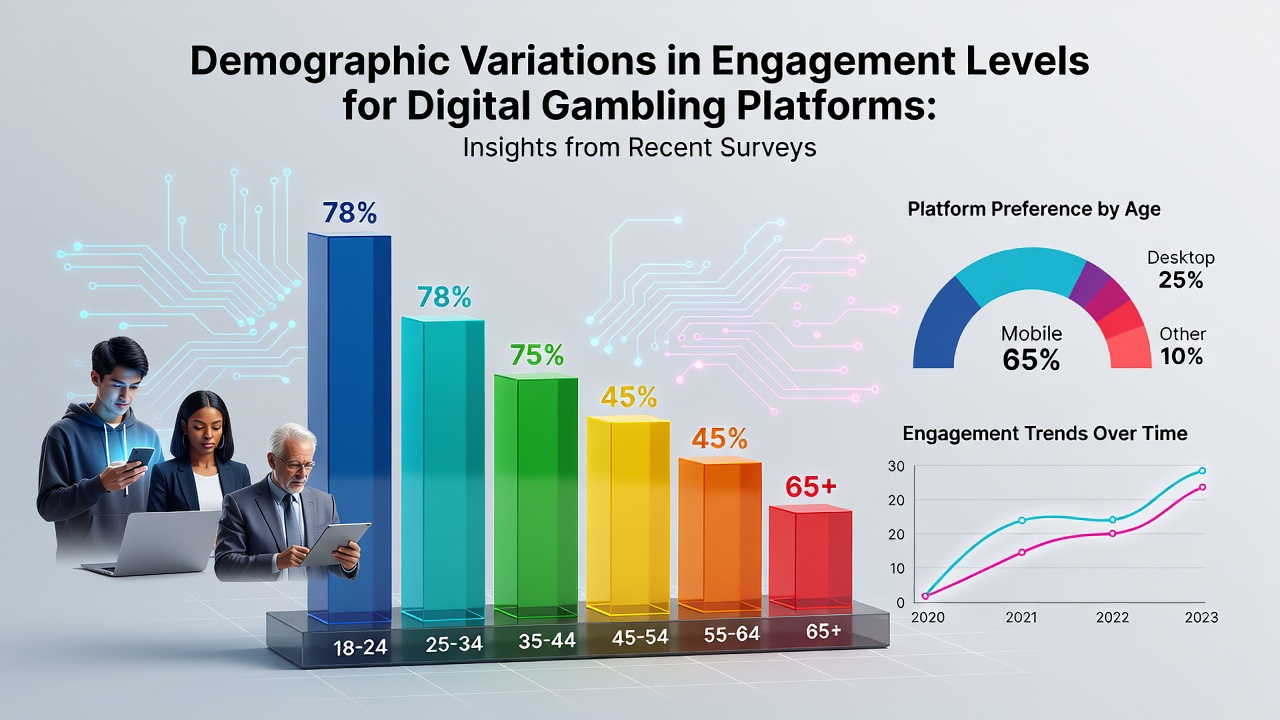
Surveys conducted through the first half of 2026 reveal clear patterns in how different demographic groups interact with digital gambling platforms, and researchers continue to track these shifts as markets expand across multiple jurisdictions. Data from national and international polling efforts show that engagement does not distribute evenly, with participation rates varying by age, gender, income, and location in ways that influence operator strategies and regulatory approaches alike.
Age-Based Patterns in Platform Usage
Younger adults between 18 and 34 maintain the highest rates of account activity on digital platforms, according to aggregated survey results released in early June 2026, while older cohorts demonstrate steadier but lower-frequency engagement. Those in the 35-to-54 range often combine mobile access with occasional desktop sessions, creating hybrid usage profiles that differ from the always-on patterns seen among the youngest users. Participants over 55 show increasing adoption rates compared with prior years, yet they tend to favor established operators and simpler game formats rather than the live-streaming or esports-adjacent options popular with Gen Z bettors.
Gender Differences Across Engagement Metrics
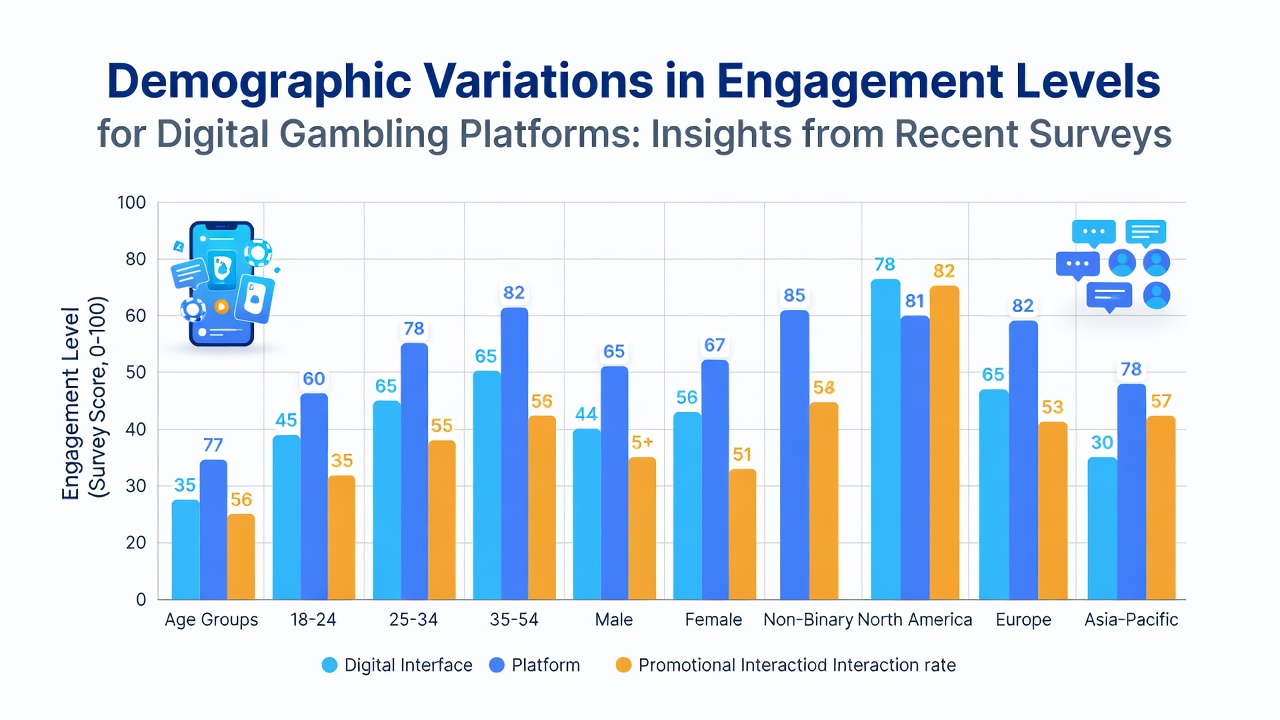
Men continue to outnumber women among active digital gamblers in most surveyed markets, but the gap narrows when researchers measure session duration and game-type preferences rather than simple account creation. Women report higher participation in lottery-style and slot-based products, whereas men skew toward sports wagering and poker variants, a distinction that appears consistently across North American and European samples. Recent polling indicates that female engagement rises notably when platforms introduce deposit limits and responsible-gaming tools, suggesting that perceived safety features affect retention differently by gender.
Income and Socioeconomic Influences
Household income correlates with both frequency of play and average wager size, though the relationship is not strictly linear. Middle-income groups show the broadest participation across multiple platform types, while higher earners concentrate activity in premium or VIP features. Lower-income respondents appear more likely to use promotional bonuses and free-to-play entry points before converting to paid play, according to cross-tabulated survey data. Education level also surfaces as a factor, with college-educated users demonstrating greater awareness of regulatory protections and responsible-gaming resources.
Geographic and Urban-Rural Divides
Urban residents access digital platforms at higher rates than rural populations, largely due to differences in broadband reliability and smartphone penetration. State-level data from the United States and provincial figures from Canada illustrate how legalization timelines affect adoption, with markets that legalized earlier showing more mature demographic distributions. A report compiled by the American Gaming Association highlights that states with mobile-only frameworks attract slightly younger and more tech-comfortable cohorts than those permitting retail integration. In Australia, figures released by the Australian Gambling Research Centre indicate similar urban concentration, though overall participation remains shaped by strict advertising rules that limit platform visibility.
Platform and Product Preferences by Demographic
Survey responses reveal that mobile apps dominate across nearly all groups, yet desktop usage persists among older and higher-income segments for complex betting interfaces. Crypto-enabled platforms draw disproportionate interest from users aged 25 to 44, while traditional payment methods remain preferred by those over 50. Live dealer games attract balanced gender splits in several European markets, whereas sports betting continues to skew male regardless of region. Observers note that push-notification frequency and reward structures also interact with demographic variables, with younger users responding more readily to time-limited promotions.
Recent Trends Observed Through Mid-2026
Surveys fielded in May and June 2026 capture modest increases in female and older-adult participation following the introduction of enhanced verification tools and deposit-limit defaults on major platforms. Regional disparities persist, however, as markets with recent regulatory changes show different demographic mixes than long-established ones. Researchers continue to examine how inflation and economic uncertainty affect wager sizes across income brackets, with preliminary data suggesting that lower- and middle-income groups adjust frequency before altering stake amounts.
Conclusion
Collective findings from multiple 2026 surveys underscore that engagement with digital gambling platforms reflects intersecting demographic variables rather than uniform growth across populations. Age, gender, income, and geography each shape distinct usage patterns, and these differences inform both commercial decisions and policy discussions. Continued monitoring through the remainder of the year will clarify whether current trends stabilize or shift further as new regulatory frameworks and technological features emerge.